




About
Our History
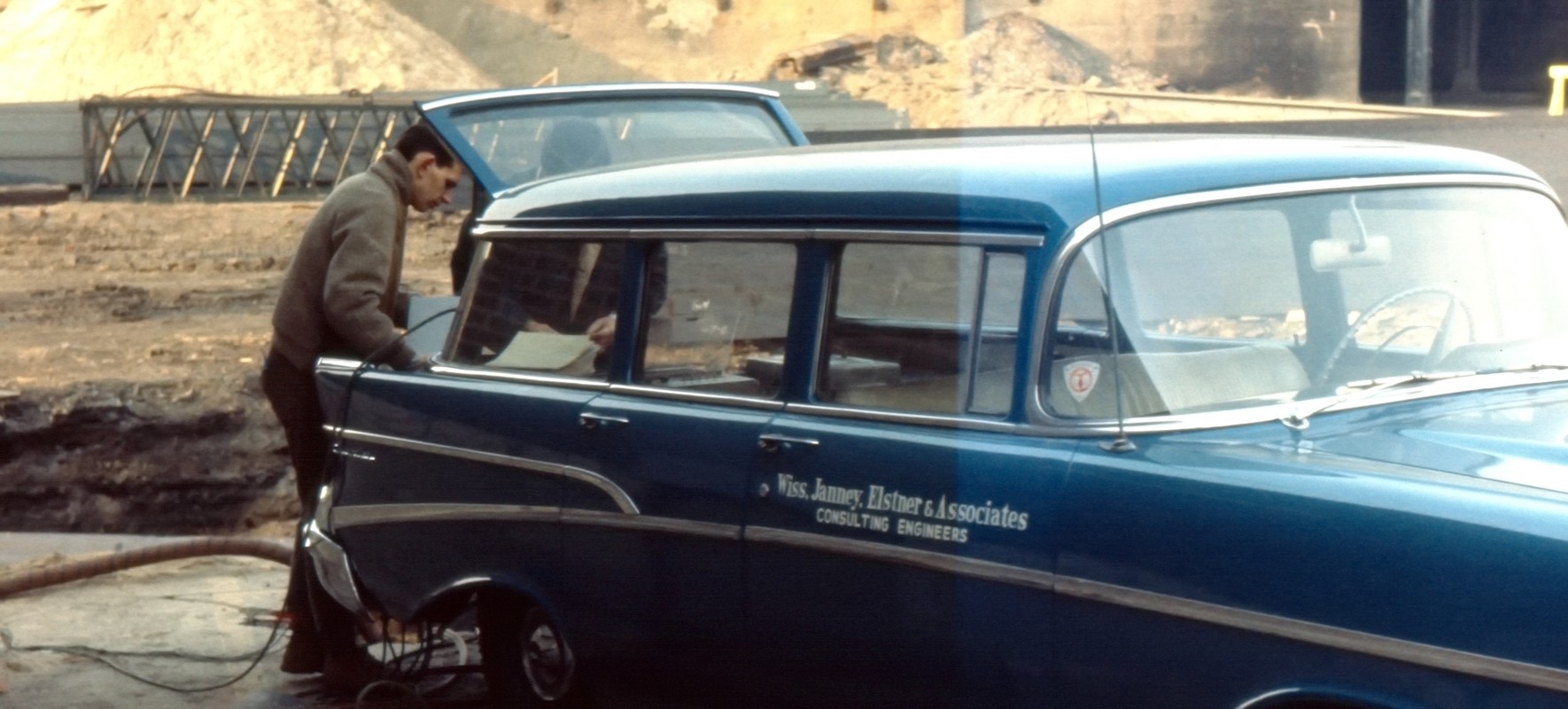
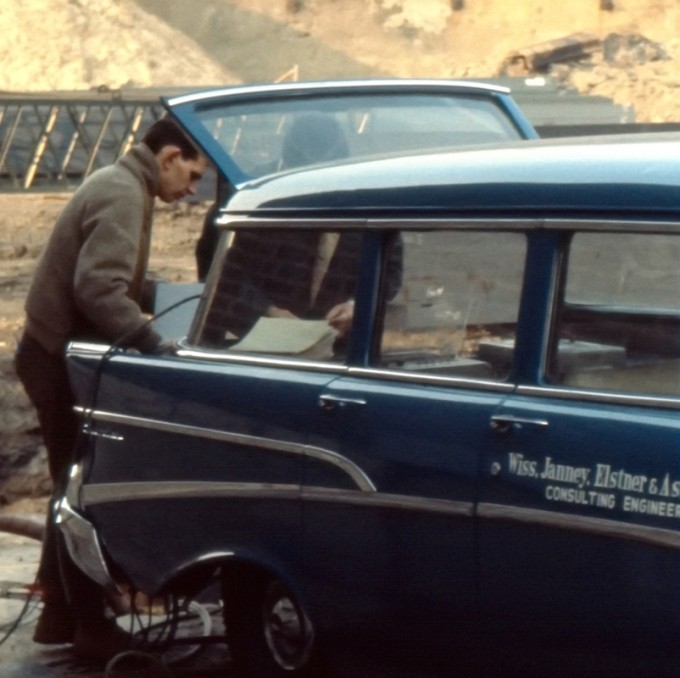
What began as a one-person engineering consultancy in 1956 has evolved into an interdisciplinary company of more than eight hundred extraordinary people regularly called upon to solve some of the world's most challenging structural, architectural, and materials problems.
1956–1960
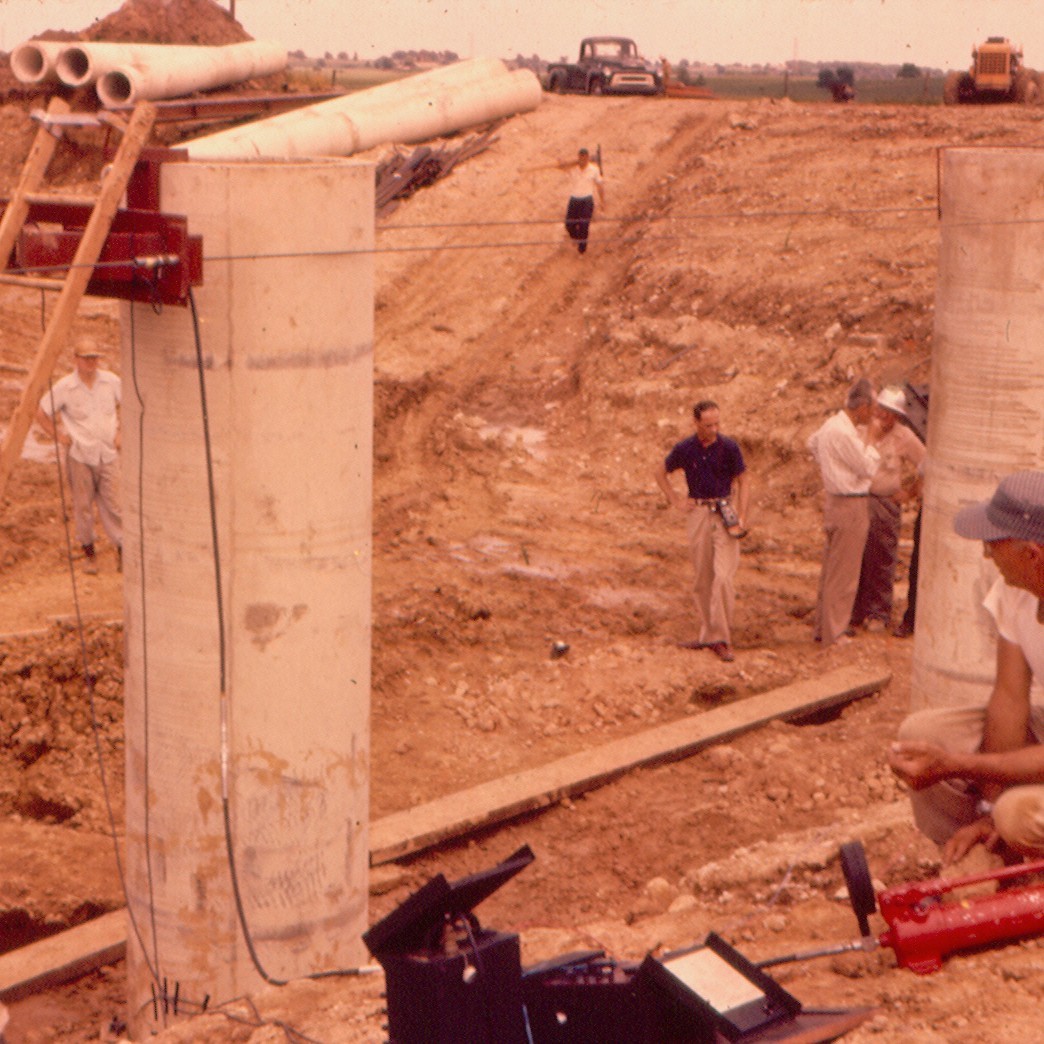
In 1956, a young engineer named Jack Janney accepted a consulting job with the Illinois Tollway Authority to perform full-scale load testing and quality control services for a massive highway construction project using what was at the time a relatively new product—precast, prestressed concrete girders—Jack's area of research at the Portland Cement Association. The project involved many of the special services that would become trademarks of the company: refining state-of-the-art designs, troubleshooting construction and fabrication problems, modeling, instrumentation, and load testing.
Jack sought help from former colleague Dick Elstner and, later, from his neighbor Jack Wiss. Their partnership and passion for problem-solving would endure well beyond that first assignment.
Right: Jack Janney, dark shirt, observes construction of the Beverly Road Bridge, built circa 1956 by the Illinois Tollway Authority using precast, prestressed concrete girders.
1961–1970
By 1962, the company had grown to five employees working on fifty projects a year with annual billings approaching $150,000. As the staff size increased to meet a growing demand for services, the partners decided to construct their own building in Northbrook, Illinois, complete with a 7,000-square-foot structural testing laboratory.
Shortly after moving to the new headquarters, the National Academy of Sciences retained WJE to conduct full-scale load tests on three buildings at the site of the 1964 New York World’s Fair. To date, it was the company’s largest project with a fee of $280,000. The successful project was heralded as an innovative engineering feat and established the reputation of Wiss, Janney, Elstner and Associates as a leading investigative and testing firm. Years later, Jack Janney considered it the job that “put WJE on the map.”
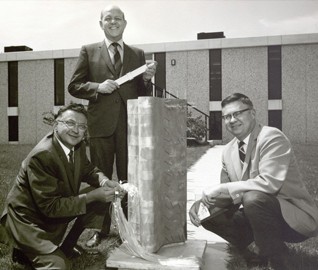
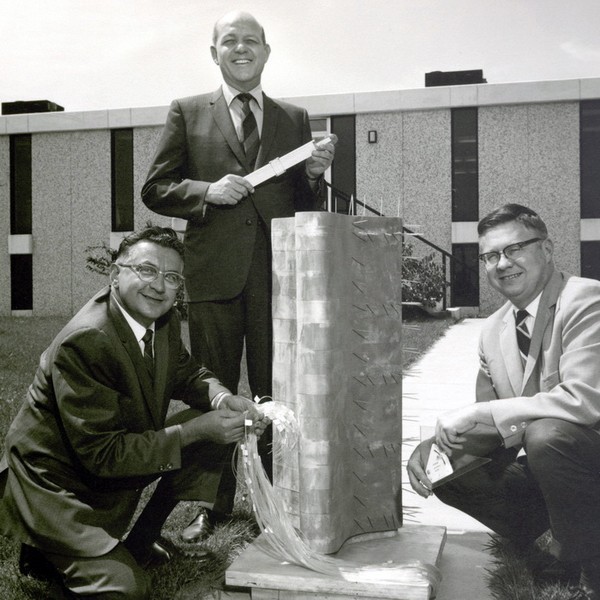
Left: Jack Wiss, Jack Janney, and Dick Elstner pose in front of the company's new headquarters building with a scale model of Lake Point Tower, which they constructed to study the effects of wind on the uniquely shaped Chicago lakefront high-rise.
1971–1980
With a reputation for structural investigations well established by the 1970s, the company focused on expanding our areas of expertise. Throughout the decade, we pioneered the use of computer-controlled data acquisition systems performing structural integrity tests of nuclear containment structures around the United States. We also become increasingly involved in building envelope investigations, applying our creative problem-solving approach to the architectural components of buildings.
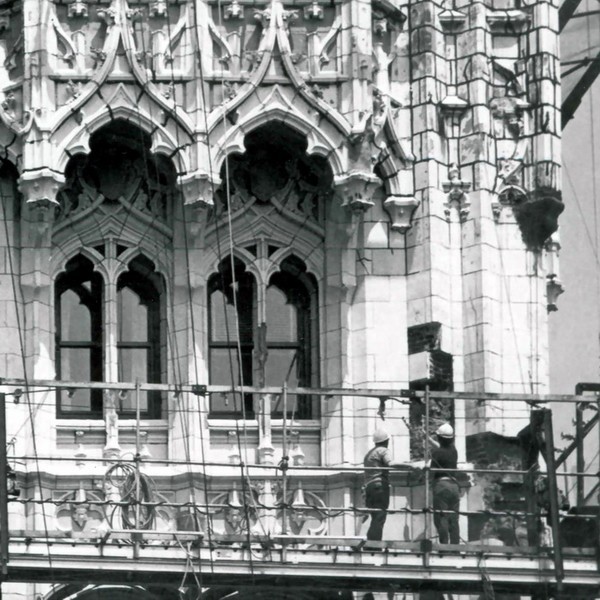
Right: WJE was engaged as the technical consultant for the repair and restoration of the landmark Woolworth Building's terra cotta facade. It was the company's first major architectural project.
1981–1990
WJE embarked on a period of significant expansion during the 1980s, both in technical expertise and geographic reach. We acquired Erlin Hime Associates in 1984—a materials science and testing firm that brought petrographic and chemical analysis capabilities in-house. And, after establishing our first branch offices in San Francisco and Honolulu at the end of the prior decade, we opened eight new locations in Princeton, Denver, Dallas, Austin, Seattle, Chicago, Atlanta, and Washington, D.C.
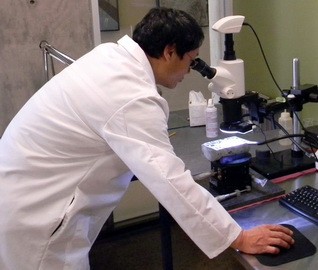
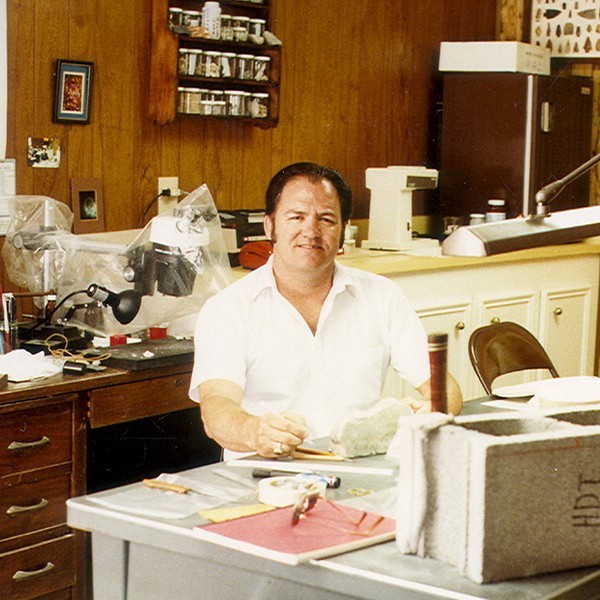
Left: Petrographer Tom Patty at work in the early days of WJE's petrography lab. Our capabilities have expanded since then, as have our laboratory facilities.
1991–2000
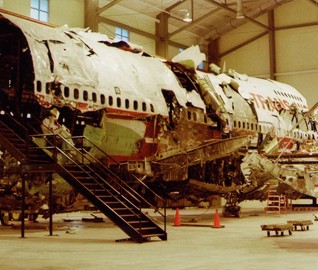
The 1990s were marked by continued change and growth, unique project challenges, and increased national attention on the company—most notably for our work following the Northridge earthquake, damage assessments after the 1993 World Trade Center attacks, and reconstruction of the ill-fated TWA Flight 800. As the century came to a close, we restructured our employee stock ownership plan, expanding ownership opportunities and allowing employee-owners to make a monetary investment in the future of WJE for the first time.
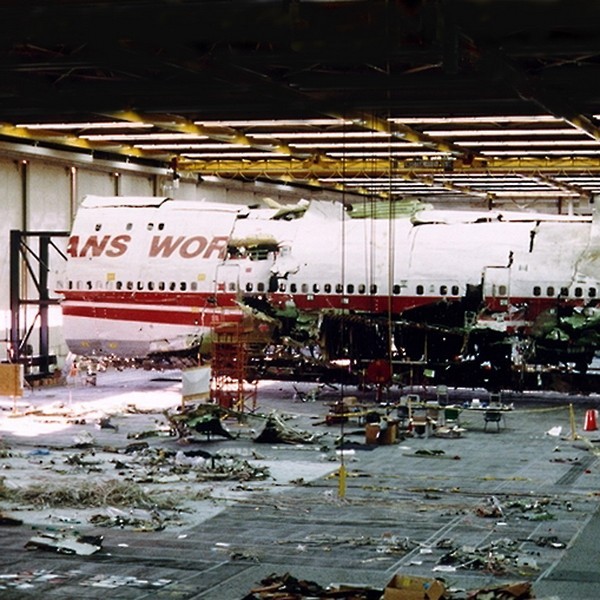
Right: WJE reassembled the recovered pieces of a 94-foot-long segment of TWA 800 to permit unobstructed viewing of the aircraft to assist in diagnosing the cause of the crash. The project remains the world's largest aircraft reconstruction and set the standard for future reconstructions.
2001–2010
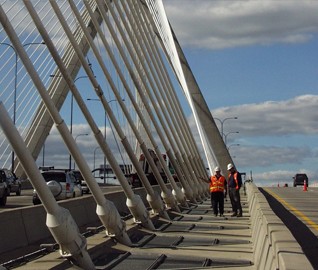
At the dawn of our second half-century, WJE had grown to more than 400 employees, solving problems from nineteen offices around the U.S. We celebrated our 50th anniversary in 2006 with an all-company conference in downtown Chicago. Later that year, we were retained by the Commonwealth of Massachusetts to perform a comprehensive safety audit of the Big Dig project in Boston—arguably the defining project of the decade. More than sixty WJE employees were mobilized for the first phase of the investigation, which was successfully completed within the client's ambitious 90-day timeframe.
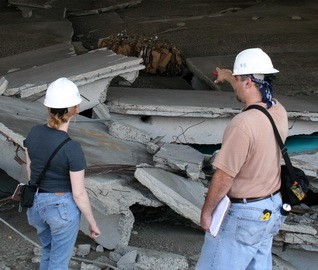
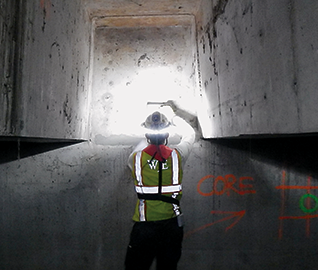
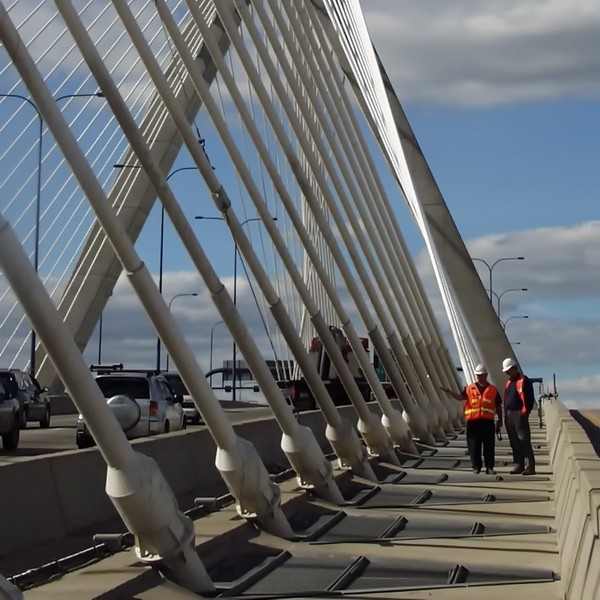
Left: Following a fatal ceiling collapse and subsequent discoveries of systematic problems at the Big Dig, WJE examined more than sixty-six lane miles of roadway, tunnels, and structures with minimal disruption of normal operations and within the project delivery schedule of ninety days. At $15 billion, the Big Dig was the nation's largest civil infrastructure improvement project.
2011–Present
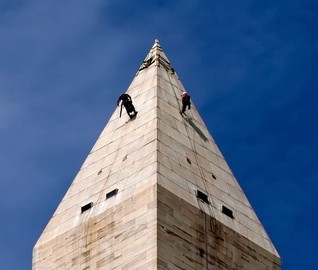
Today, WJE is an global leader in forensic engineering, architecture, and materials science. Our more than 800 experts and professionals work together to solve the built world's most interesting, challenging, and noteworthy problems, including the investigation and repair of the Washington Monument following the 2011 Mineral Earthquake and the investigation of the Champain Towers South condominium collapse in 2021.
With more than 7,500 projects annually on behalf of thousands of clients, we're solving problems on a scale our founders only dreamt of in 1956. Yet, their character, commitment, expertise, and enthusiasm live on as the foundation of our culture and our business. Those qualities have been key to our success across time and are carried forward by our people today.
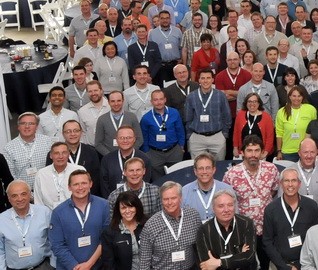
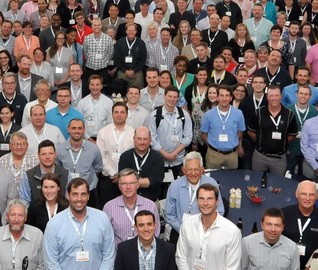
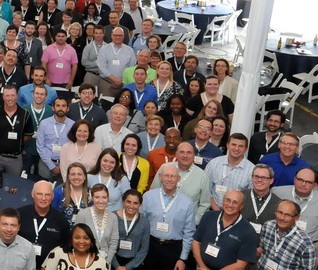
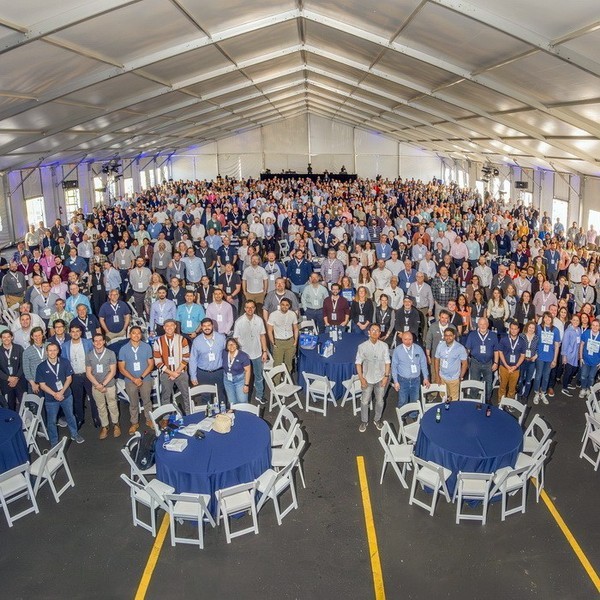
Right: Every WJE employee gathered at our Northbrook, Illinois, headquarters in May 2024 for a three-day conference dedicated to sharing knowledge, building relationships, and reinvigorating our one-company spirit and high aspirations for the future.
The future of Wiss, Janney, Elstner is limitless.
– Jack Janney, 2006
